
Europe has made products and materials recyclable, but has not fully developed the systems to recycle them.
The Gap
Recyclable ≠ recycled
Making something recyclable does not mean it will be recycled.
Good design is only the starting point.
Without effective collection, sorting and recycling infrastructure, investment, a functioning market for recycled materials and consistent implementation and enforcement across Member States, recyclable materials can still end up in landfill or incineration.
Europe’s recycling challenge is no longer just about what we produce. It is about whether our systems are capable of keeping valuable materials in circulation.
2025 recycling targets
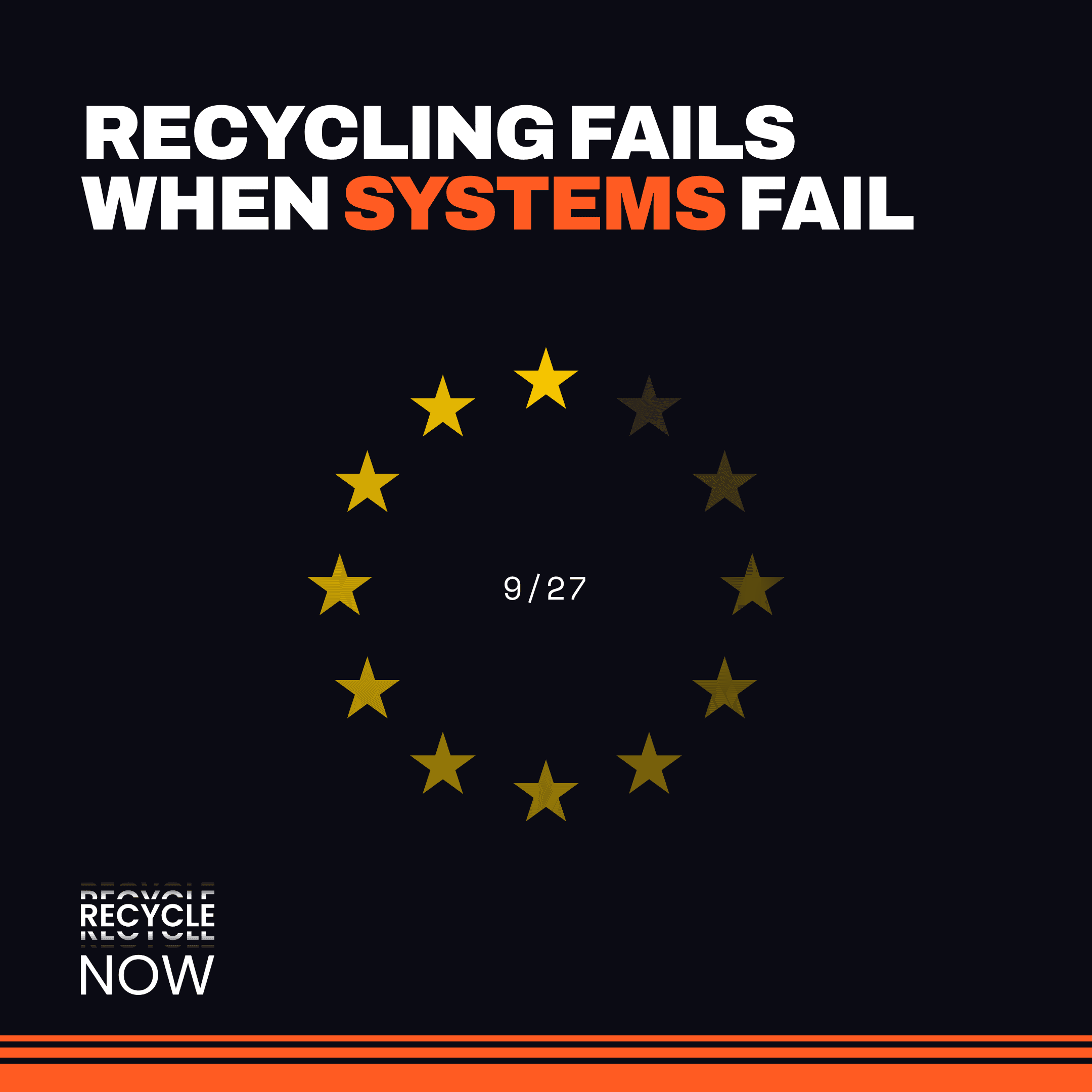
9/27
Only nine Member States are expected to meet the EU’s 2025 recycling targets.
Municipal waste to landfill
≈13/27
Nearly half of EU countries still landfill more than 30% of their municipal waste.
The Asks
Four priorities to make circularity work
01
Defend the Single Market
A circular economy needs the Single Market
Europe cannot close the loop with 27 fragmented waste and recycling systems. Harmonised criteria, definitions and procedures are essential to scale recycling and enable secondary materials to move freely across Europe.
The priorities
- One Single Market for waste and secondary raw materials
- Harmonisation to reduce fragmentation and barriers
- A stronger circular economy that reduces reliance on virgin materials
02
Strengthen collection and recycling
Recyclable is not the same as recycled
Recycling starts with effective collection. Too many valuable materials are still lost to landfill or incineration because collection, sorting and recycling systems remain uneven across Europe.
The priorities
- Stronger and more consistent collection systems
- Investment in modern sorting and recycling infrastructure
- Effective implementation and enforcement across Member States
03
Make EPR deliver
Make EPR work for circularity
EPR can drive Europe’s circular economy — but only if systems are transparent, well governed and consistently implemented. EPR fees must support the systems needed to deliver circularity and better recycling outcomes.
The priorities
- Strong and clear EPR governance
- Transparent fees, eco-modulation and reporting
- EPR funding directed towards collection, sorting and recycling
04
Build a 21st century circular economy
Breaking down barriers to Europe’s competitiveness
Europe cannot build a truly circular economy on 27 different administrative systems. A more circular and competitive Europe requires a harmonised framework that avoids unnecessary duplication and makes compliance simpler for businesses across the Single Market.
The priorities
- Harmonise rules to remove fragmentation in registration, reporting and compliance
- No barriers to cross-border movement of waste and secondary raw materials
- Simpler compliance and digital solutions to reduce administrative burden
The Economics
Circularity is an industrial policy, not a waste policy
From manufacturing and construction to packaging, electronics and energy, European industries rely on effective circular systems to remain competitive.
Better recycling keeps valuable resources in the loop, strengthens supply chains and strategic autonomy.
Recycling means
- Stronger supply chains
- Greater industrial resilience
- Quality jobs and investment
- Greater strategic autonomy
0.5%
Potential increase in EU GDP by 2030 from circular economy measures.
700k
Jobs circular economy measures could create across the Union.
≈49%
EU municipal waste recycling rate in 2022 — progress, but far short of what the system needs to deliver.
Circular material use rate — against the 2030 target
Now — 12.2% (2024), up from 11.8% (2023)
2030 target — 24%
The Manifesto
From recyclable to recycled.
Europe needs systems that turn circular ambitions into tangible outcomes.
Recycle Now is an ongoing campaign, open to everyone committed to making circularity work in Europe. Register your interest and we’ll be in touch as the initiative takes shape. There is no commitment at this stage, simply an opportunity to get involved.
Read the Manifesto
Campaign visuals
Help spread the message
Download and share the Recycle Now campaign visuals across your channels.
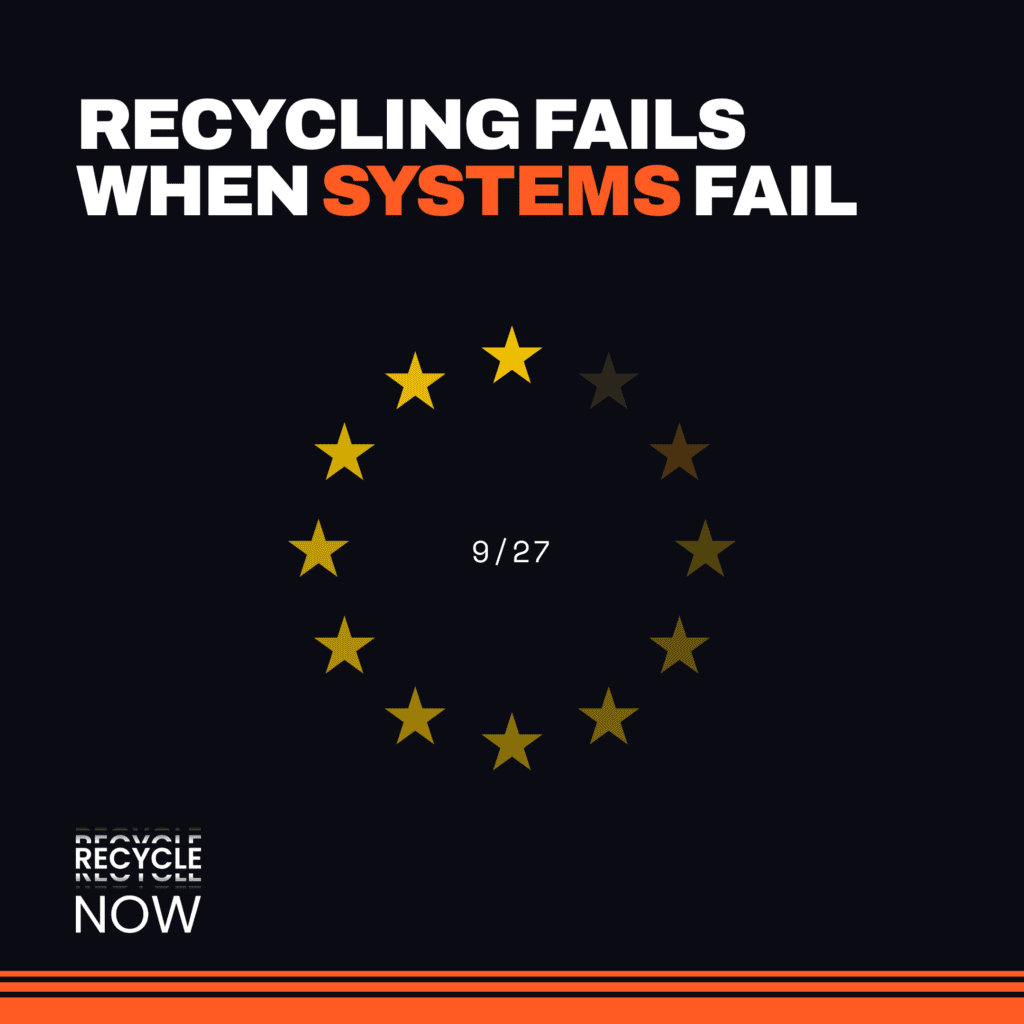
Recycling fails when systems fail
Close the infrastructure gap to deliver a competitive circular economy
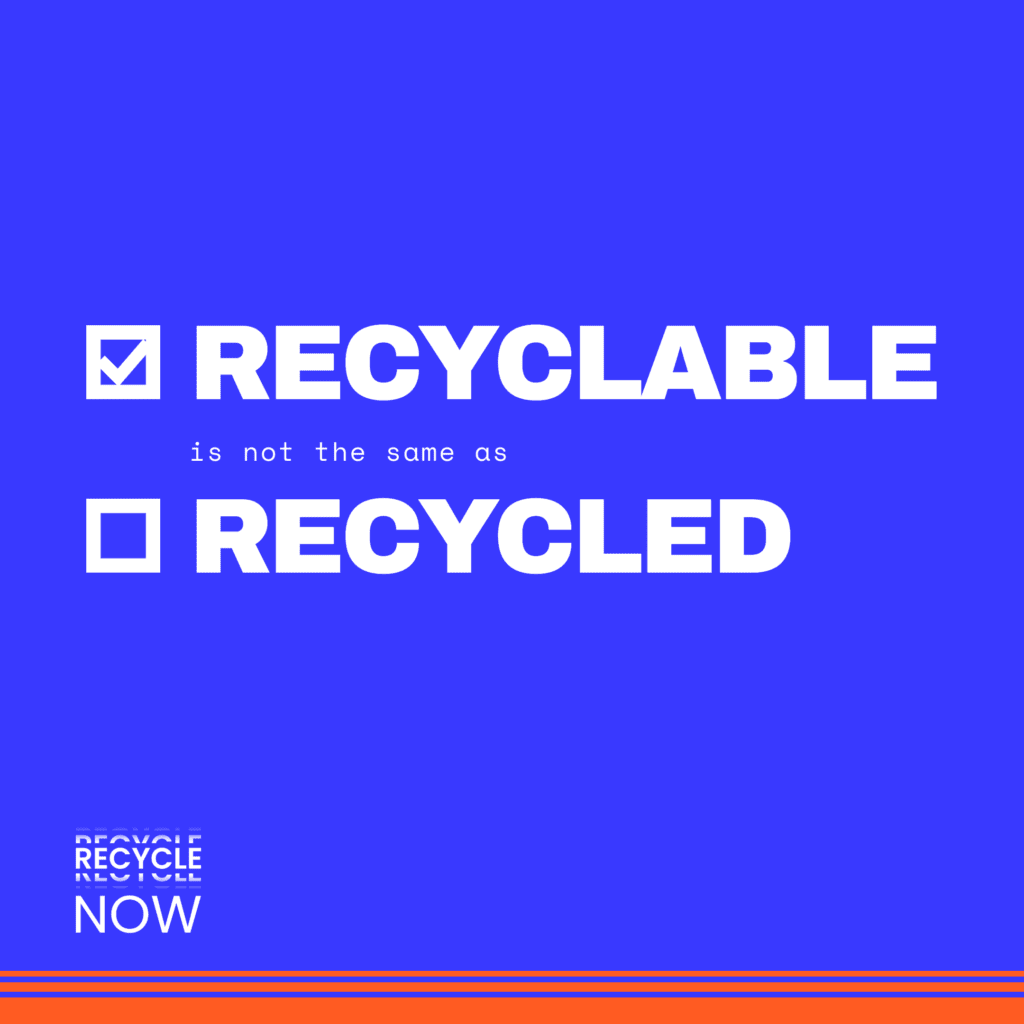
Recyclable is not the same as recycled
Making something recyclable does not mean it will be recycled.
And that second half of the equation is too often overlooked.
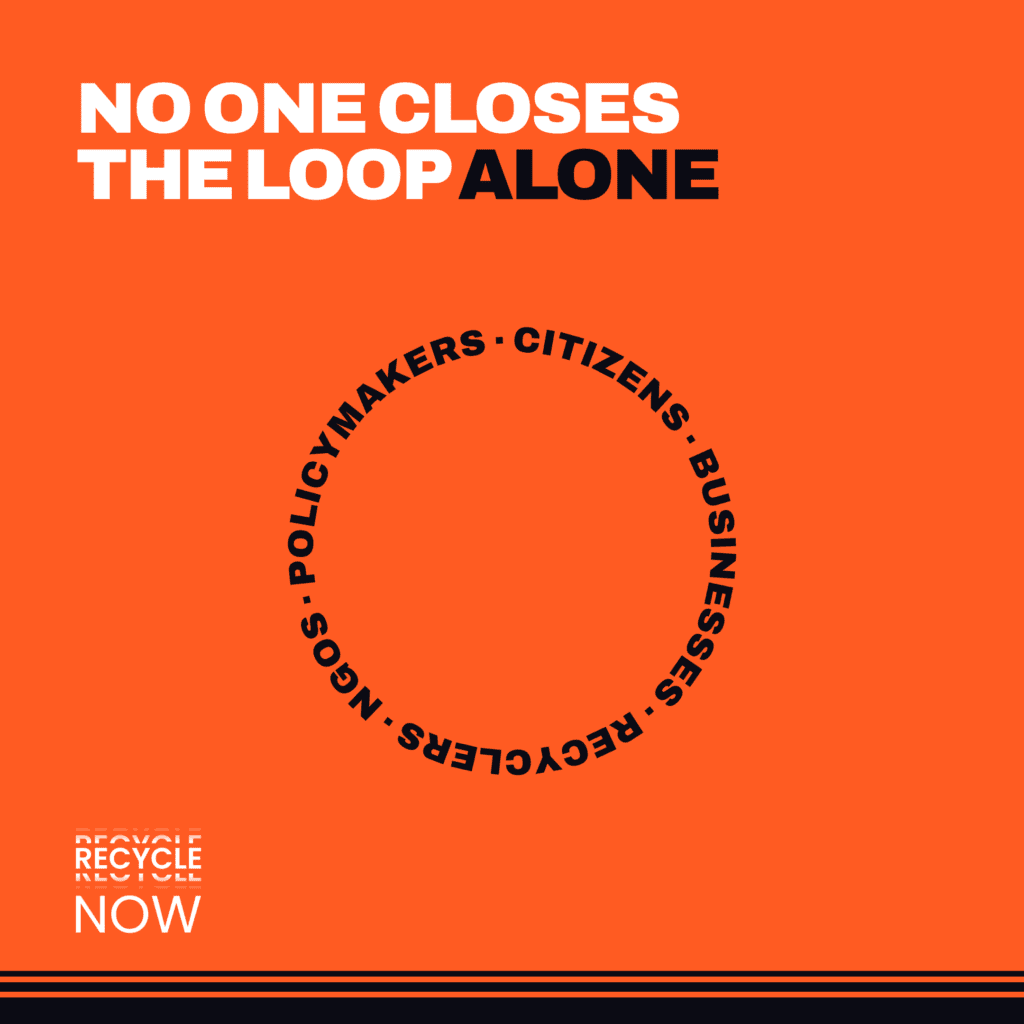
No one closes the loop alone
A circular economy needs all of us.
Citizens. Businesses. Recyclers. NGOs. Policymakers.
Recycle to compete
Recycle to build a stronger, more resilient economy.
Circularity is an industrial policy, not a waste policy
From manufacturing and construction to packaging, electronics and energy, European industries rely on effective circular systems to remain competitive.
Better recycling keeps valuable resources in the loop, strengthens supply chains and strategic autonomy.
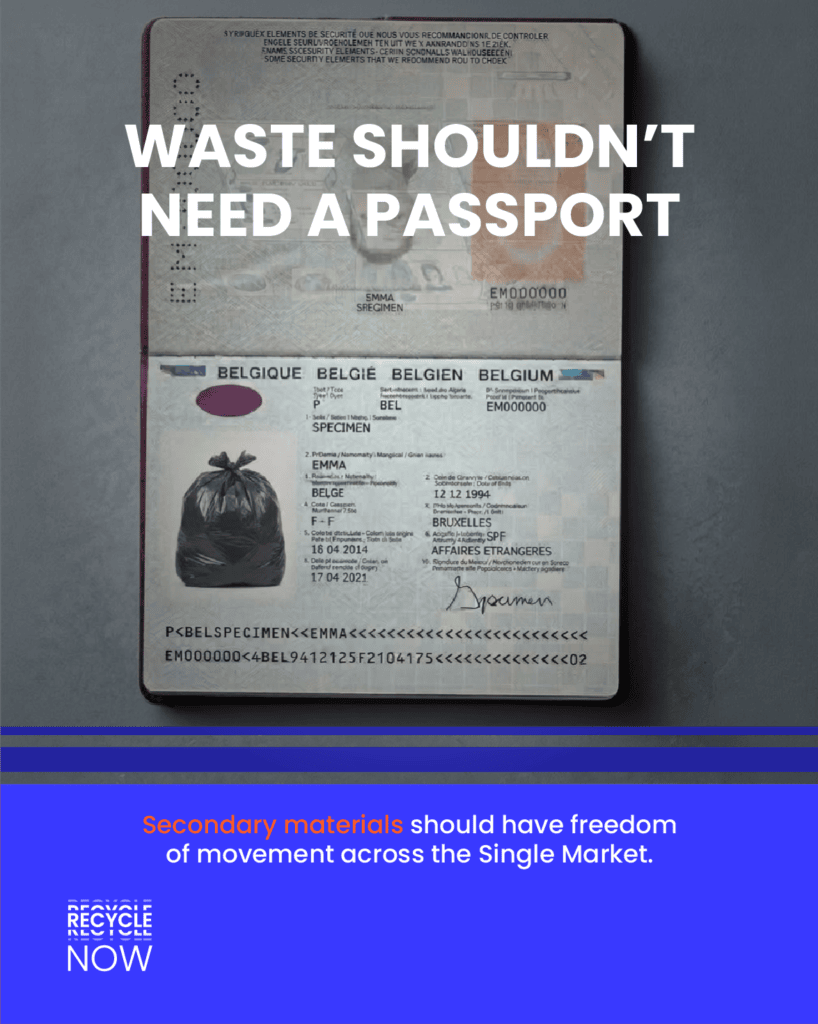
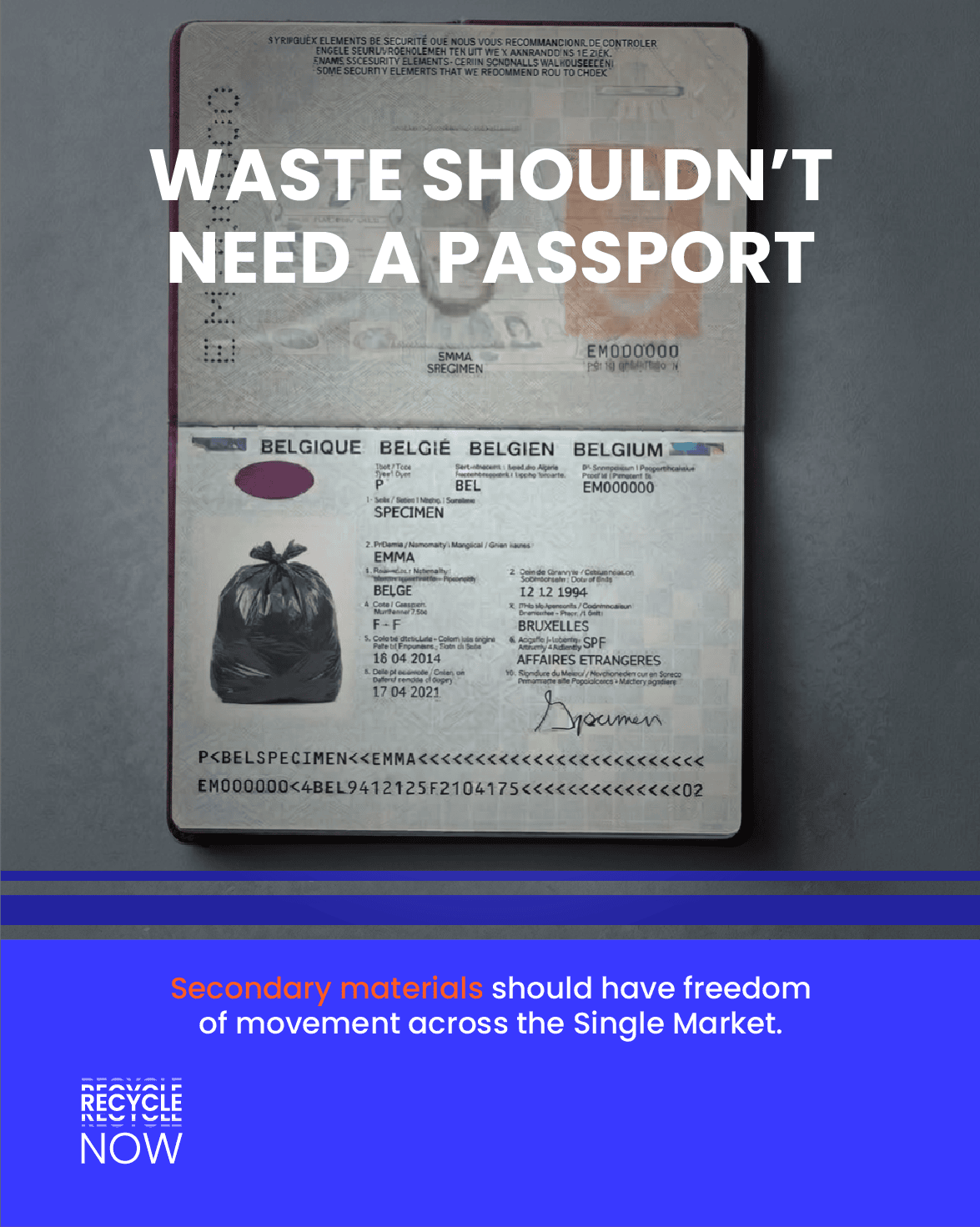
Waste shouldn’t need a passport
Secondary materials should have freedom of movement across the Single Market.
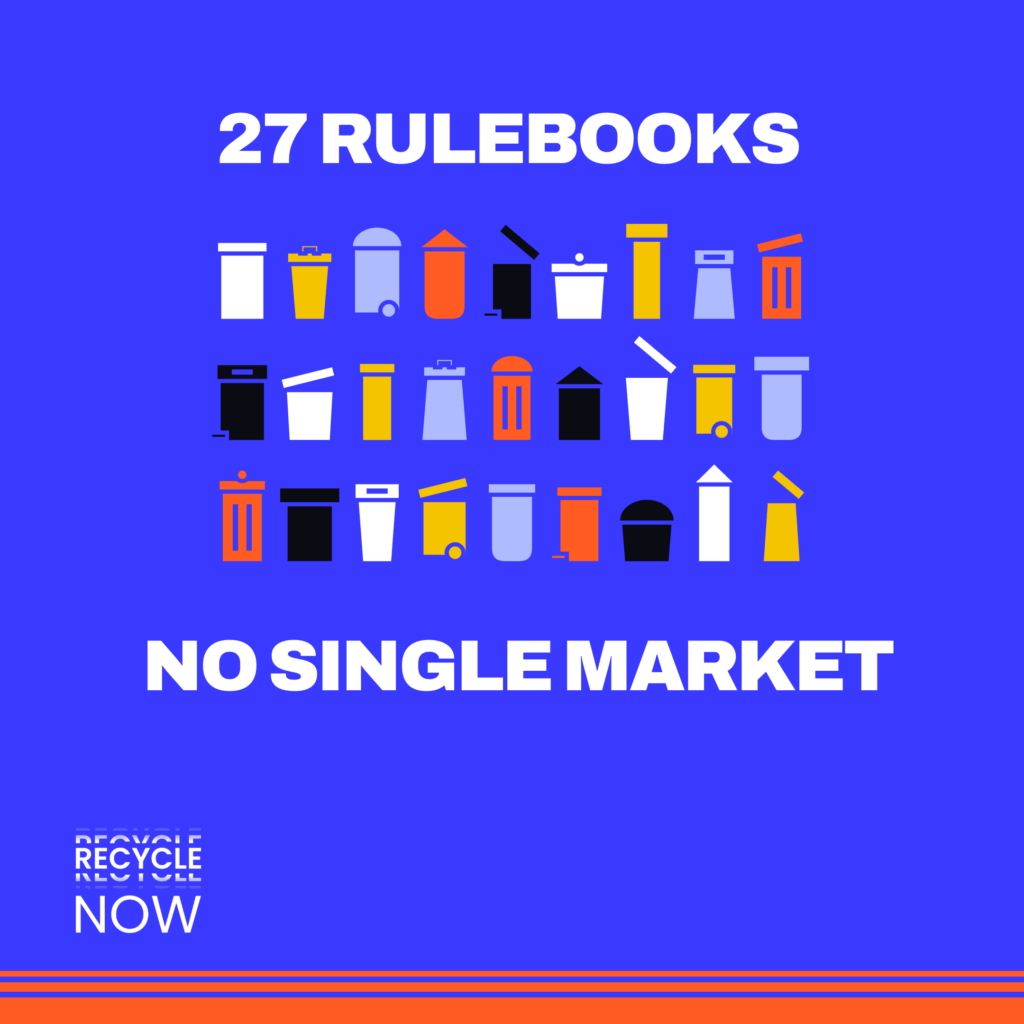
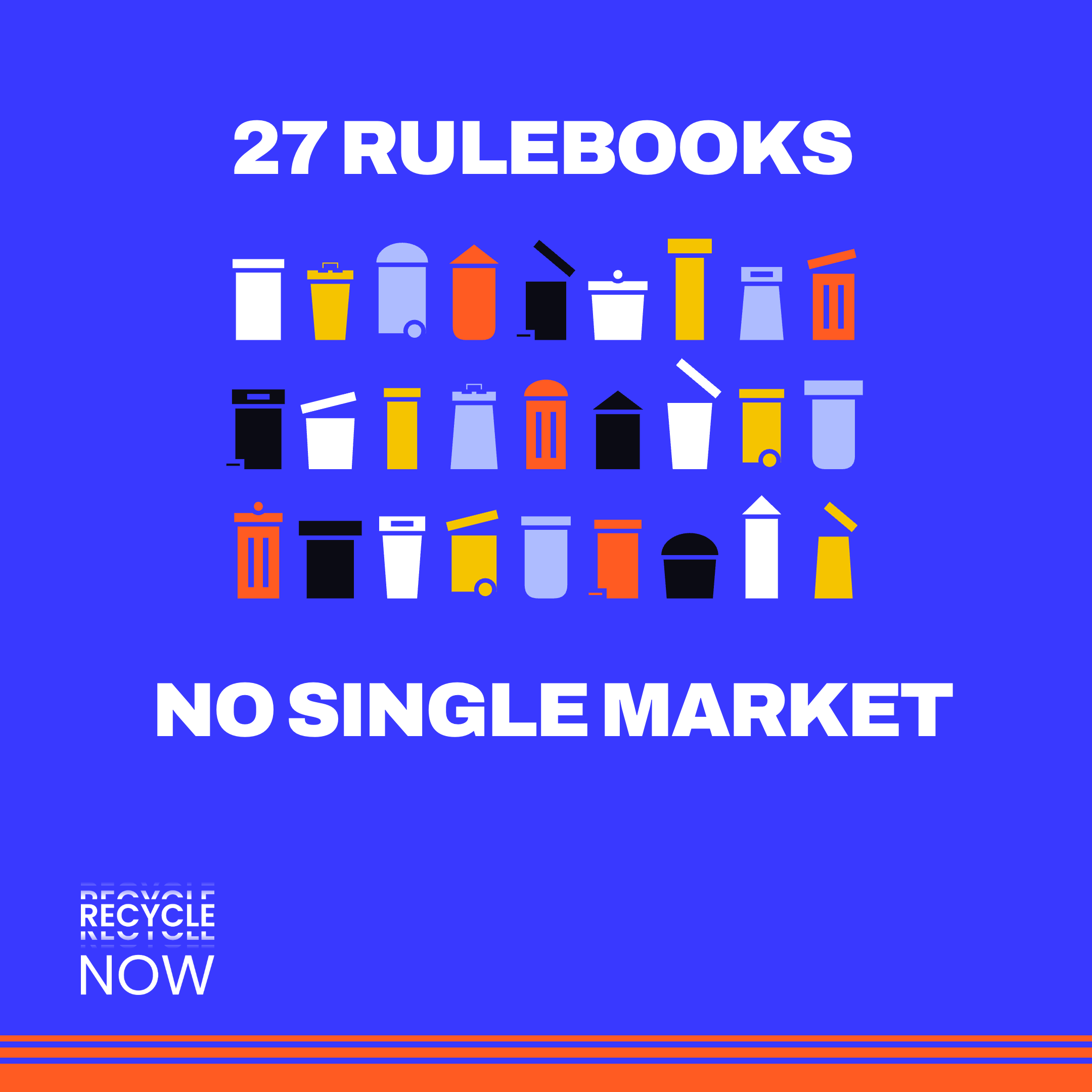
27 rulebooks, no single market
From recyclable to recycled.
Let’s close the gap.
Europe’s recycling loop still has a gap.
Recycle Now
Become a Partner
Recycle Now is an ongoing campaign, open to everyone committed to making circularity work in Europe. Register your interest and we’ll be in touch as the initiative takes shape. There is no commitment at this stage, simply an opportunity to get involved.